Taking Care of Our Own Knowledge Again
A reflection on AI, cognitive overload, and why building your own knowledge system may be the only way to stay grounded.
There is a kind of fatigue we still do not talk about enough.
Not just the fatigue of screens, notifications, social media, or overcrowded days. A more diffuse, stranger kind of fatigue, perhaps born from this feeling that everything is now possible. All the time. Immediately.
With AI, we were promised a great deal of saved time. Fewer repetitive tasks. Less friction. Less unnecessary effort. And, in some ways, that is true. I use AI every day, and I am not going to pretend I am watching it from a distance with suspicion. I love technology and what it makes possible, the doors it opens, the ideas it sometimes unlocks. There is something genuinely powerful in these tools.
But precisely because they are powerful, they may require more lucidity.
The Black Hole of Creation
Because instead of simply freeing up our time, AI sometimes seems to pull us into something else. A black hole of creation. A place where every idea suddenly becomes achievable, every intuition can become a project, every project can turn into a product, a text, an image, a video, an agent, a complete system. We start with a simple question, and three hours later we are imagining an entire architecture, an autonomous second brain, an army of little assistants capable of doing the work of several people.
On paper, it is fascinating, but in the mind, it is exhausting.
There is something intoxicating about that feeling. We tell ourselves that the barriers are falling. That what once required a team, time, and very different skills can now be initiated alone, in front of a screen. We can write, code, summarize, search, analyze, produce. We can ask a model to think like one expert, then another, then an entire team. We can simulate points of view, generate plans, identify blind spots.
And very quickly, without necessarily realizing it, we start to feel a little like God.
Not in a megalomaniac sense. More in that discreet feeling that everything could come out of us, or at least pass through us. As if AI turned every thought into immediately usable raw material. As if every desire had to become something. As if not creating were almost a lack of ambition, or a form of laziness.
That is where the promise turns against itself.
AI was supposed to help us do less. Sometimes it pushes us to want to do more. Much more. Too much.
And this “too much” is not just a question of quantity. It is a question of our relationship with thought. When everything can be generated, it becomes harder to know what truly deserves to be pursued. When everything can be summarized, it becomes harder to know what we have actually understood. When everything can be produced, it becomes harder to distinguish what comes from us, what passes through us, and what is merely a well-worded answer.
When Access Replaces Knowledge
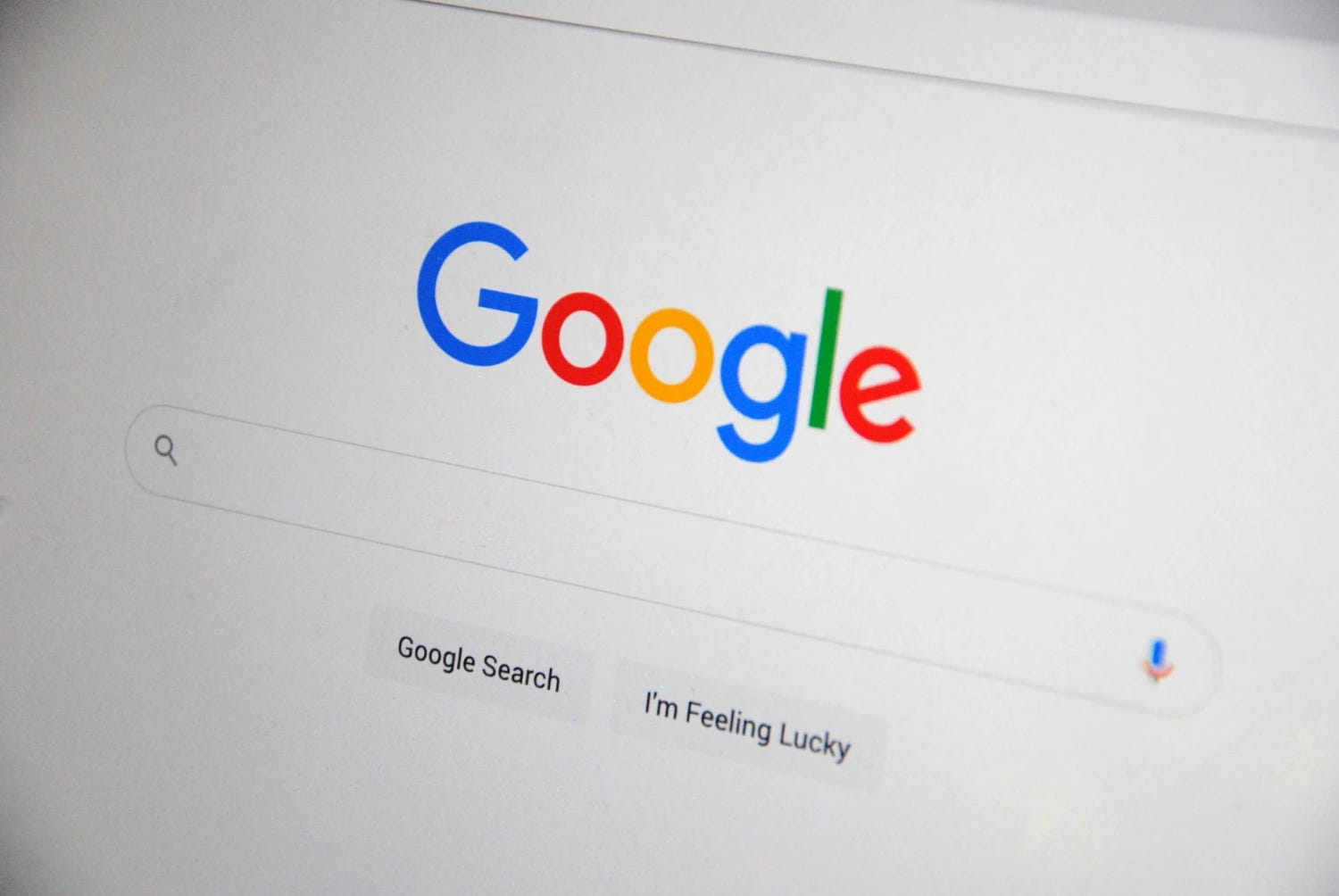
I often think back to a phrase we already heard a few years ago: “No need to learn, there is Google.”
Even then, it bothered me. Of course, there was something seductive about it. Why memorize what we can find again in a few seconds? Why learn things by heart when information is available everywhere? Google changed our relationship with knowledge. It did not erase learning, but it gave the impression that access could replace knowledge.
Today, with AI, something similar is coming back, but with one important difference.
Google gave us access to information. We still had to search, sort, compare, read, doubt. Of course, not everyone always did that. But there was still a visible distance between the question and the answer. AI, on the other hand, sometimes gives the impression of thinking with us, or even for us. It does not simply point to information. It reformulates it, synthesizes it, organizes it, makes it fluid, almost obvious.
And that is precisely what makes it so comfortable.
We start by using it like an improved search engine. Then we ask it to structure our ideas. Then to decide between several options. Then to write. Then to anticipate. Then to create. Over time, the boundary becomes less clear. Am I using a tool to help me think, or am I delegating part of my thinking? Am I gaining clarity, or am I getting used to no longer going through the difficulty myself?
I do not believe we should reject these tools. That would be too simple, and probably useless. Like any powerful technology, AI is neither good nor bad in itself. It depends on what we do with it, who uses it, in what context, and with what level of awareness. Nuclear power can produce electricity for an entire country. It can also destroy one. The comparison is brutal, but it reminds us of one thing: power is never neutral when it is not accompanied by responsibility.
The problem with AI, then, is not only technical. It is cultural and educational.
We are exposed to a continuous stream of information, images, analyses, comments, real or false content, sincere or fabricated, human or generated. Everything blends together. Truth circulates alongside error. Intuition alongside manipulation. Knowledge alongside noise. And after seeing so much pass by, we sometimes end up doubting everything. What is true appears suspicious. What is false appears credible. What matters gets lost in what is merely visible.
In this context, learning can no longer simply mean “having access to information.”
Learning, today, may mean recovering the ability to keep our bearings. And to keep a sharp critical mind.
Rebuilding Our Own Encyclopedia
I then think back to something very concrete. At home, when I was a child, there were encyclopedias. The Grand Larousse and Tout l’Univers. Yes, I am old, or let’s say I knew that time when knowledge had weight, literally. It took up space in a bookcase or on a shelf. You opened a volume, flipped through it, and stumbled upon something other than what you were looking for.
I am not saying everything was better. Information was less accessible, less diverse, less alive too. The internet opened immense doors. It gave access to voices, knowledge, and perspectives that no family encyclopedia could ever contain. I do not want to return to a closed world, frozen and limited to a few volumes.
But I believe there was something in those encyclopedias that we may have lost: the idea that knowledge is built in a place.
Not necessarily a physical place. But an identifiable space. A place where things are deposited, connected, found again. A place that is not simply crossed by the flow, but keeps a memory.
Maybe that is why the idea of PKM speaks to me so much. Not as a miracle method. Not as a perfect system where everything has to be obsessively filed away. I have already seen what happens when systems become heavier than what they are supposed to support. But as a living library. An intimate encyclopedia. A space where we can reclaim what we read, what we understand, what we want to keep. A space, also, to keep a sharp critical mind.
A PKM, in that sense, is not just an organizational tool. It is a way of resisting the flow.
It means saying: not everything deserves to come in. Not everything deserves to be kept. But what matters, I want to be able to find again, connect, confront with other ideas. I want to know what I think, not only what I have seen pass by. I want to be able to distinguish consumed information from assimilated knowledge. And I want to keep that inner vigilance that prevents me from accepting everything just because it is well worded, fast, or seductive.
This may seem almost derisory in the face of the power of AI and agents. Building your own personal library, at a time when models can produce summaries in a few seconds, could look like a step backward. A form of nostalgia, but also a reflex from the old world.
I believe the opposite: it is deeply current.
The faster the world produces, the more we need slow spaces. The more tools generate, the more we need places to understand. The faster answers arrive, the more we must cultivate our ability to ask good questions.
A Space to Stay Present With What We Think
Digital sovereignty is not only about choosing a piece of software, a protocol, or a platform. It also plays out in our relationship with our own thought. Who organizes what I know? Who prioritizes what matters? Who decides what I keep? Who connects ideas together? Is it me, or is it always an external system presenting the world to me in a pre-digested form?
This is where the notion of the “second brain” perhaps deserves to be questioned.
I understand the image. It is useful. It captures well this need not to carry everything mentally, to create a space of support, memory, and extension. But I am wary of the idea of a second brain that would eventually think in my place. I do not want a replacement brain. I want a workshop. A library. A place where my ideas can mature without being immediately transformed into production.
Maybe the real issue is not having a smarter, more automated, more agentic second brain. Maybe the real issue is having a space that helps us remain present with what we think.
A space that does not replace effort, but makes it more inhabitable.
Because there is a difference between being assisted and being dispossessed. A difference between using AI to clarify a thought and handing it the responsibility of thinking. A difference between creating with a tool and letting the machine pull us into endless production.
I do not want to leave AI behind. I do not want to pretend it does not exist, or that it has nothing to offer us. But I want to learn how to live better with it. Not to confuse speed with understanding. Not to confuse generation with creation. Not to confuse access to knowledge with the construction of knowledge.
And perhaps that starts with a simple gesture: rebuilding our own encyclopedia.
Not a universal, complete, objective, definitive encyclopedia. A personal encyclopedia that is partial, alive, and evolving. Made of notes, readings, links, intuitions, and contradictions too. A place where we accept that understanding takes time. Where we do not only seek to accumulate, but to connect.
In a world that produces too much, learning to preserve, connect, and understand becomes an almost political act.
Creating your own encyclopedia is not a step backward, but perhaps a way not to lose yourself.