
Substack Was Never a Paradise
Substack is evolving, like any private platform. Maybe the real question isn’t what it’s becoming, but what we expect from it.
I’ve been reading quite a lot about Substack lately. Criticism, disappointment, sometimes even a sense of disillusionment. As if the platform had changed its nature. As if it were gradually moving away from what it had promised to be: a calm, almost protected space to write, publish, read, and think. But is that really the case?
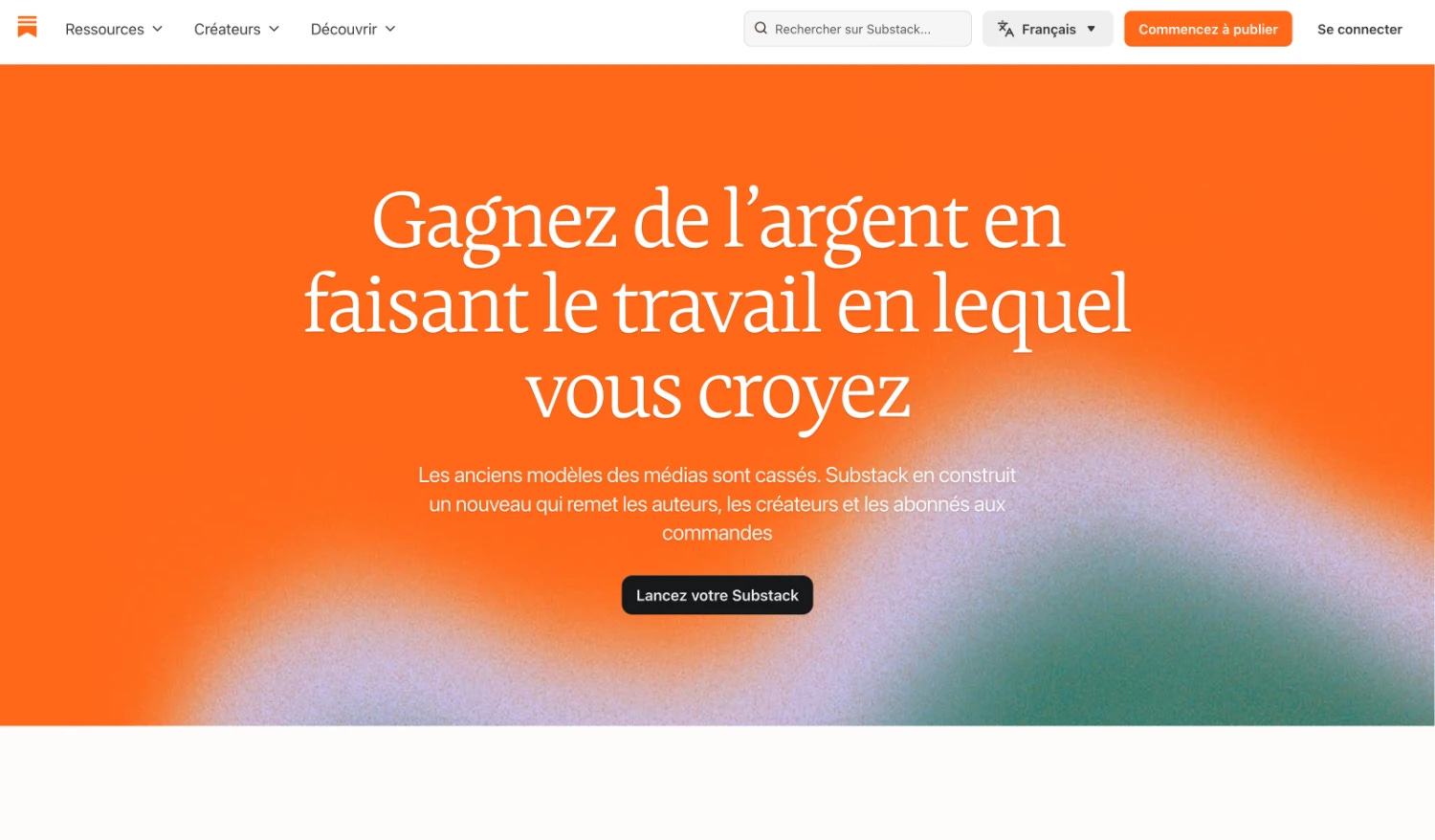
When the platform starts to look like the others
I understand part of that frustration. When I go on Notes, I see more and more photos, sketches, drawings, and highly visual posts. Sometimes, I almost feel like I’m seeing a kind of Instagram built into Substack.
To be honest, I also publish photos myself, because they are an integral part of who I am and, in one way or another, they influence what I write.
At other times, I see posts that look much more like LinkedIn, with its codes, formulas, and small engagement mechanics.
But at the same time, I can’t really say I’m surprised.
Substack now offers video, live video, podcasts, notes, recommendations, and tools designed to help content circulate. A whole toolkit for creators, not just writers. Not just people who want to publish a text in a quiet corner of the web. And from the moment a platform moves in that direction, it becomes difficult to keep seeing it as a haven for writing.
It is not necessarily a betrayal. It may simply be the logic of a private platform following its own path.
The illusion of owning a space that does not belong to us
And this is where, I think, the subject becomes more interesting than Substack itself. Because deep down, what troubles me is not only the evolution of a tool. It is the illusion of control we project onto the platforms we use.
We arrive somewhere. We settle in. We publish. We begin to create a small habit, a small space, sometimes even a community. And little by little, we start to believe that this place belongs to us a little. Not legally, of course. But emotionally. Symbolically.
Except a private platform never truly belongs to us.
It can welcome us, give us visibility, make our lives easier. It can even let us publish our newsletters, our articles, our thoughts, and our fragments of work for free. But it remains a company. With investors, costs, priorities, trade-offs, and a need for growth. Sooner or later, the business model always comes back to the surface.
And that is not necessarily scandalous. The money has to come from somewhere.
What seems more naive to me, however, is expecting a private company to take our needs into account as if they were at the center of its existence. As if it had to preserve our personal idea of the good web, the right rhythm, the right usage. As if it had to remain frozen in the version that suited us best.
Taking back control differently
I am not saying we should not criticize Substack. On the contrary. We should be able to do that. We should be able to name what is changing, what is tiring, what is bothering us. But we also need to look at the situation clearly. If we really want to take back some control, maybe we should not look for another magical platform. Maybe we should look toward other foundations.
And this is where protocols like ActivityPub or AT Protocol become interesting.
Not because they are perfect. Not because they solve everything. But because they shift part of the problem. They allow us to imagine spaces that are less closed, less dependent on a single platform, where publishing would no longer have to remain trapped inside a silo.
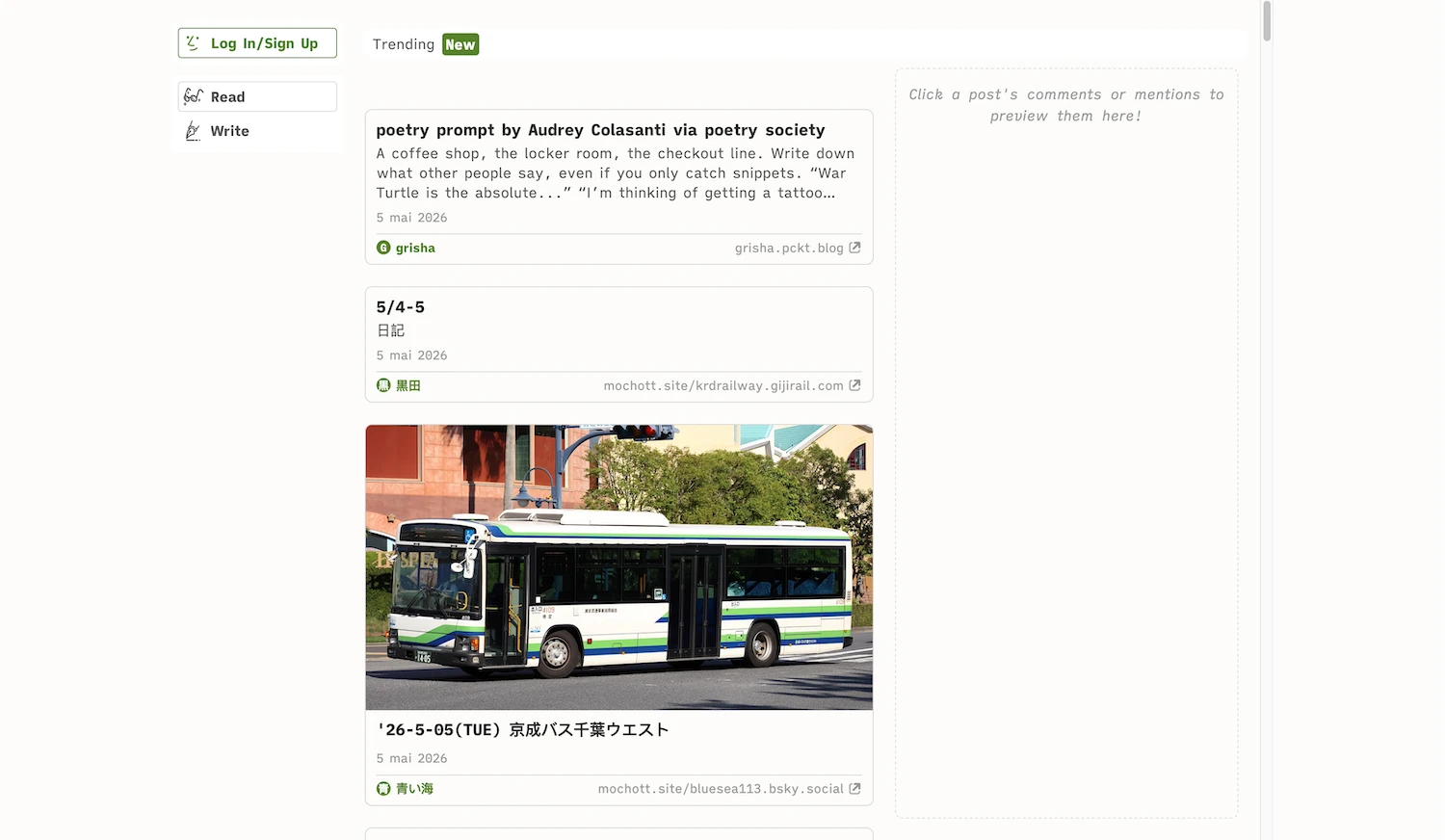
This is what makes me curious today about projects like pckt blog, Leaflet, or Offprint, especially within the AT Protocol ecosystem. Offprint follows a logic that feels quite close to Substack, while Leaflet is currently testing a beta feature that lets readers subscribe to a blog by email. I am watching all of this with interest, still cautiously, but with the feeling that something is happening. A small attempt to rebuild differently. Not necessarily against existing platforms, but alongside them. On different foundations.
But there is also a more technical point, and yet an essential one: some of these projects are beginning to rely on shared standards, such as Standard.site, which provides shared lexicons for long-form publishing on AT Protocol. Put more simply, the idea is to make content easier to discover, index, and circulate across the ATmosphere. I encourage you to look into it, because this is precisely where things become interesting. If someone publishes an article on Leaflet, it can also appear as a feed on pckt.blog or Offprint. The content is no longer locked inside a single space. It can circulate between several compatible tools.
What I like about this idea is that it changes the nature of the choice. We can choose the platform that suits us best, the one that resonates with us most, the one whose spirit feels closer to what we want to support, without necessarily feeling like we are sacrificing any chance of being read. Choosing a tool then becomes less about betting on the size of a community and more about inhabiting a wider ecosystem.
Inhabiting alternatives instead of waiting for them
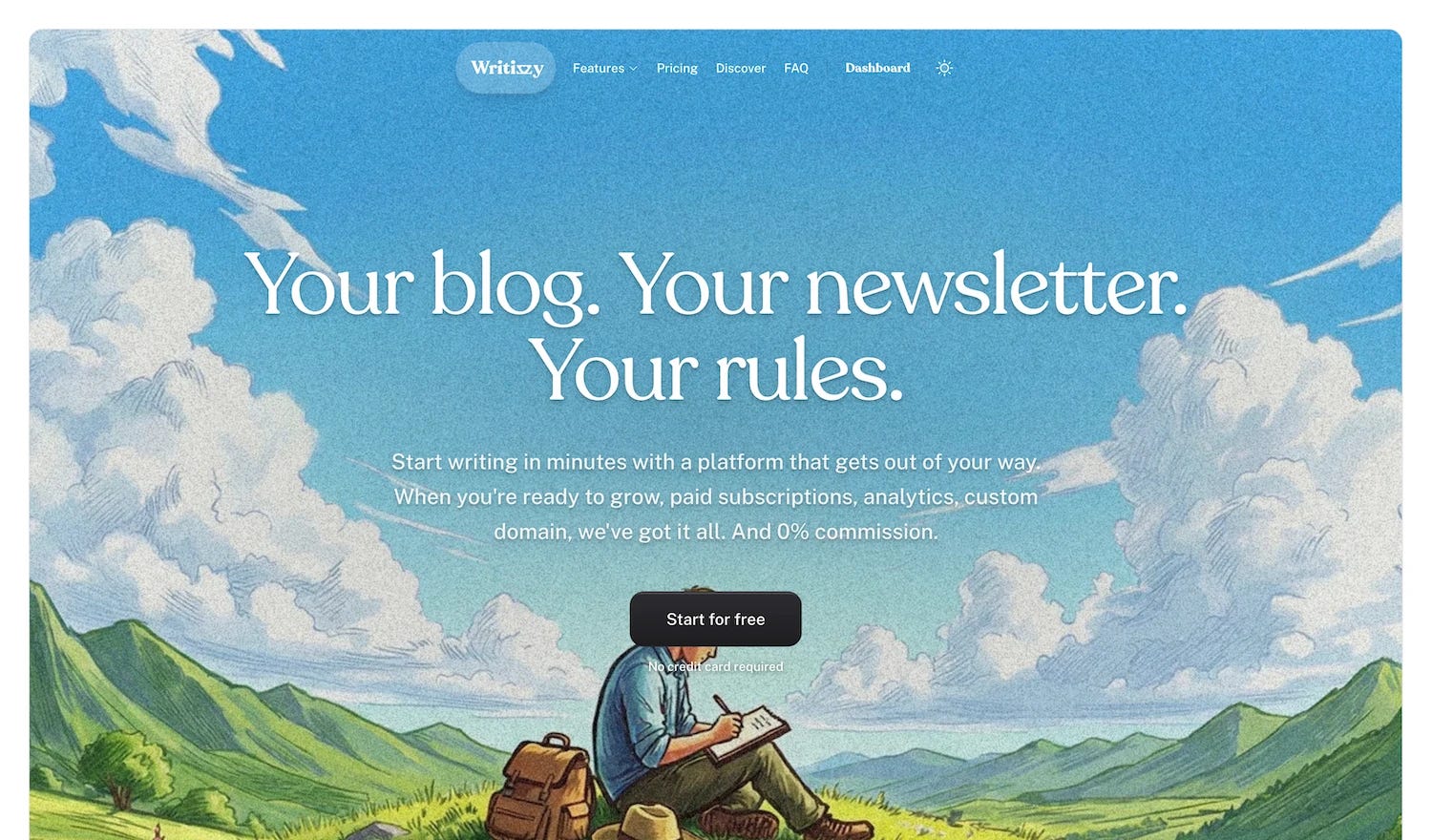
This is also why I continue to use several spaces. I am still on Substack for the English version of my blog. I think I will stay there for a while. The French version has moved to Writizzy, partly because the platform tries to rely as much as possible on tools located in Europe. And I am also thinking about duplicating the English version there in no-index, simply to add my small stone to the building.
It is not much. A few extra minutes when publishing. But I believe more and more in this idea: if no one makes the effort to inhabit these alternatives, they will remain empty. And if they remain empty, no one will want to go there.
It is a snake eating its own tail.
We sometimes wait for a community to already exist before joining it. But a community does not fall from the sky. It is built through presence, attempts, publications, and people who accept not to measure everything immediately in reach, statistics, or direct return.
I am not saying we should leave Substack. I am not going to do that myself for now. But I do think we need to stop asking private platforms to be something other than what they are. They can be useful. They can be pleasant. They can even be very good tools. But they are not neutral refuges, and even less spaces that truly belong to us.
If we want to have more weight, maybe we need to stop waiting for large platforms to bend to our needs. Maybe we need to start supporting the protocols, communities, and tools that actually allow us to participate, contribute, and influence, even modestly, the direction being taken.
Not through some heroic gesture. Not by deleting everything overnight. But by duplicating content. By opening an account elsewhere. By also publishing in a space closer to our values. By giving a bit of substance to these places that are trying to exist differently.
Substack may never have been paradise.
But that is not such a big deal.
In the end, perhaps the most interesting thing is not to look for the perfect digital paradise. It is to ask ourselves which spaces we want to help bring into existence.